 RoboPioneer
Designing AI knowledge search for a manufacturing team
Connect operational questions to the production, quality and maintenance records behind the answer.
Choose a question someone already asks
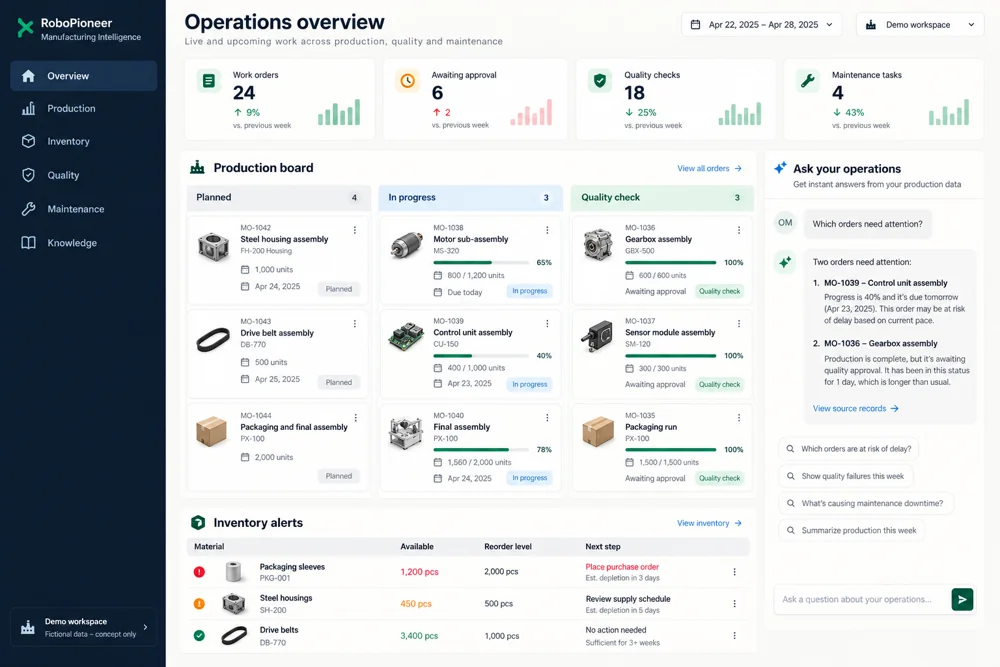
Start with a real operational question: which work orders need review, where is the relevant procedure, or what maintenance record belongs to a machine? Identify the person asking and what they will do next. This keeps the assistant connected to production planning, supervision or quality work instead of becoming a separate place to generate general answers.
Organize the source information
Documents and structured records need enough context to be useful. Version, equipment, work order, department and approval state may all matter. Decide which source is authoritative and who can see it. Manufacturing Intelligence brings production, inventory, quality and maintenance into a shared workspace so knowledge tools can be considered alongside the work they support.
Show the record behind the response
A useful answer should make its supporting information accessible. The user may need to open a source record, compare dates or ask a colleague to review a discrepancy. Distinguish a summary from an action: finding an order is different from changing it. The interface should make that transition explicit and preserve the normal approval path.
Test with representative examples
Build a small set of questions covering common work, missing information, older documents and restricted records. Ask operational users to assess whether the response points them to a useful next step. Review failures as product-design evidence: an unclear answer may reveal a missing field, a source problem or a workflow that needs a better handoff.